

×
In chemical processing, screening and separation are essential steps for maintaining product quality, process stability, and operational safety. When handling corrosive or high-purity chemical materials, conventional metal screening equipment may present limitations related to corrosion, contamination risk, and maintenance frequency.
For these reasons, plastic vibrating sieves are increasingly applied in chemical production lines as a practical and reliable screening solution.
Many chemical raw materials exhibit acidic, alkaline, or corrosive characteristics, including salts, acids, alkalis, solvents, and chemical intermediates.
Even stainless steel materials such as 304 or 316L may experience corrosion when exposed to aggressive chemicals over extended operating periods. Corrosion can reduce equipment service life and may introduce metal ion contamination, which is undesirable in controlled chemical processes.
Plastic vibrating sieves are commonly manufactured using PP (Polypropylene), PE (Polyethylene), or UHMW-PE (Ultra-High Molecular Weight Polyethylene). These materials demonstrate stable chemical resistance to most acids, alkalis, and salts, reducing the risk of corrosion-related failure and material contamination. As a result, they are suitable for chemical and pharmaceutical screening applications where material compatibility is required.
At Sanyuantang, plastic vibrating sieves are configured according to specific process requirements rather than a single standard material.
PP (Polypropylene)
Provides reliable resistance to acids and alkalis and is commonly used for general chemical powders and pharmaceutical intermediates. PP offers a balanced solution in terms of performance and cost.
Typical applications: chemical powders, fertilizers, and pharmaceutical raw materials.
PE (Polyethylene)
Offers improved impact resistance and flexibility, particularly in lower-temperature environments. PE is suitable for applications requiring mechanical toughness with moderate chemical resistance.
UHMW-PE (Ultra-High Molecular Weight Polyethylene)
Features a low friction coefficient and high wear resistance. UHMW-PE is suitable for materials prone to adhesion, agglomeration, or mild abrasion, helping reduce screen blockage during operation.
Typical applications: resin powders, pigments, powder coatings, lithium battery materials.
Appropriate material selection helps ensure stable operation, predictable service life, and reasonable operating costs.
In industries such as pharmaceuticals, fine chemicals, food additives, and electronic chemicals, contamination control is a key requirement.
Plastic materials used in vibration sieves are chemically inert and do not generate metal debris or rust during screening. This reduces the risk of foreign particle introduction and helps maintain consistent product quality throughout the screening process.
Plastic vibrating sieves have a lower overall weight compared to metal equipment.
This structural characteristic contributes to:
Easier installation and equipment positioning
Reduced effort during routine cleaning and inspection
Faster screen replacement
Lower physical workload for operators
These advantages are particularly relevant in processes involving frequent cleaning or product changes.
Engineering plastics—especially UHMW-PE—have smooth internal surfaces and low friction properties.
When processing materials that are moisture-sensitive, prone to agglomeration, or slightly adhesive, plastic vibration sieves help reduce material buildup on internal surfaces and screening meshes. This supports stable screening efficiency and reduces unplanned downtime caused by blockage.
Although metals have higher hardness values, UHMW-PE and similar engineering plastics demonstrate favorable wear resistance under many chemical screening conditions.
For materials with low to moderate abrasiveness, plastic vibrating sieves can provide a consistent service life while maintaining stable screening performance.
For screening operations involving flammable or explosive powders and dusts, equipment safety is a key consideration.
Plastic materials do not generate sparks during operation or incidental contact. This characteristic reduces ignition risk compared with metal equipment and supports safer operation in controlled chemical processing environments.
In practice, the differences between plastic and stainless steel vibrating sieves become evident during long-term operation.
| Item | Stainless Steel Vibrating Sieve | Plastic Vibrating Sieve (Sanyuantang) |
|---|---|---|
| Corrosion resistance | Limited under aggressive chemicals | Stable |
| Risk of metal contamination | Possible | Low |
| Equipment weight | Higher | Lower |
| Spark generation | Possible | None |
| Anti-sticking performance | Average | Improved |
| Maintenance frequency | Higher | Lower |
| Lifecycle cost | Higher | Lower |
For applications emphasizing corrosion resistance, contamination control, and operational safety, plastic inline sieves offer practical advantages.
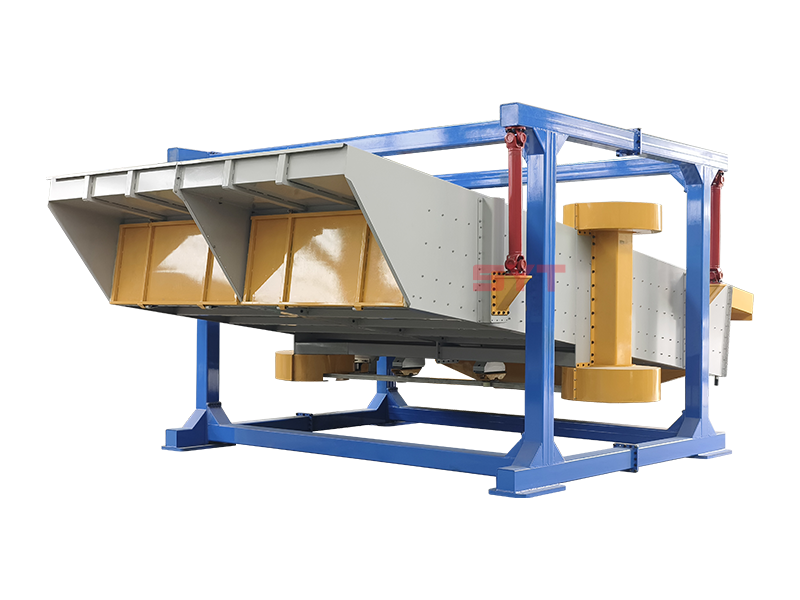
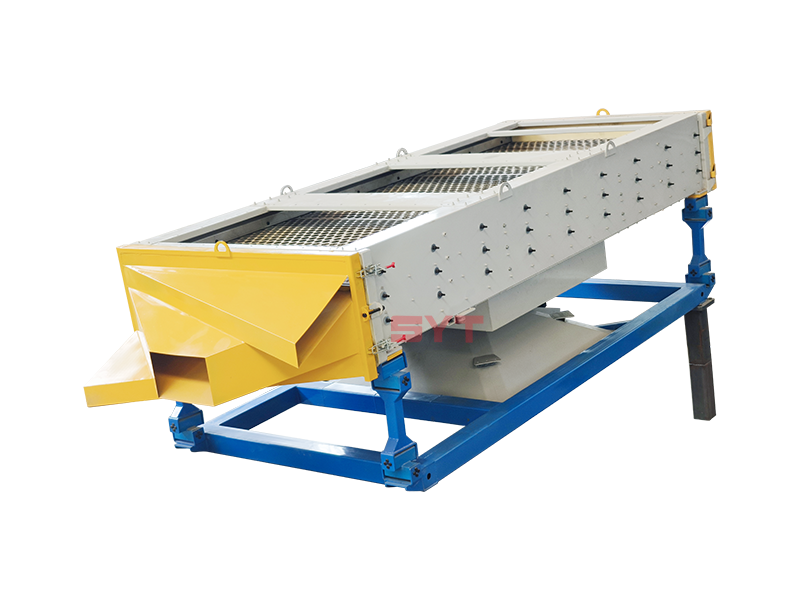
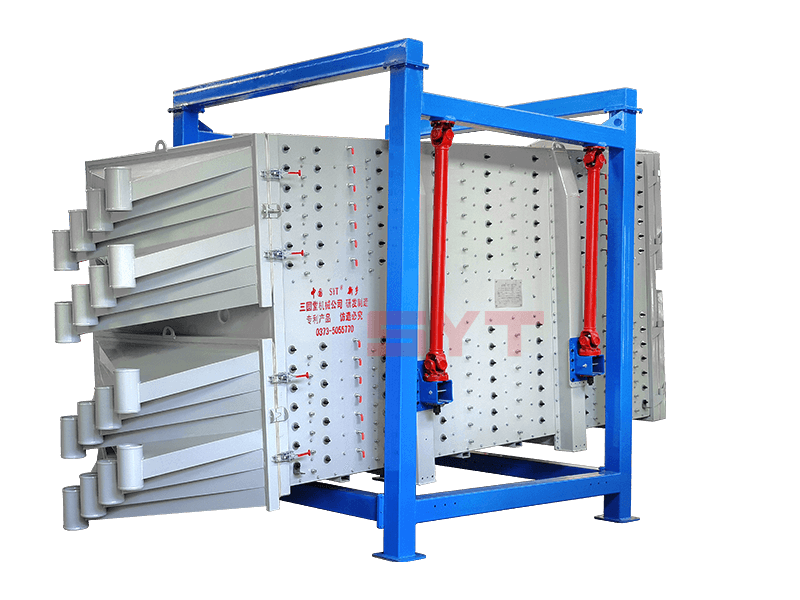
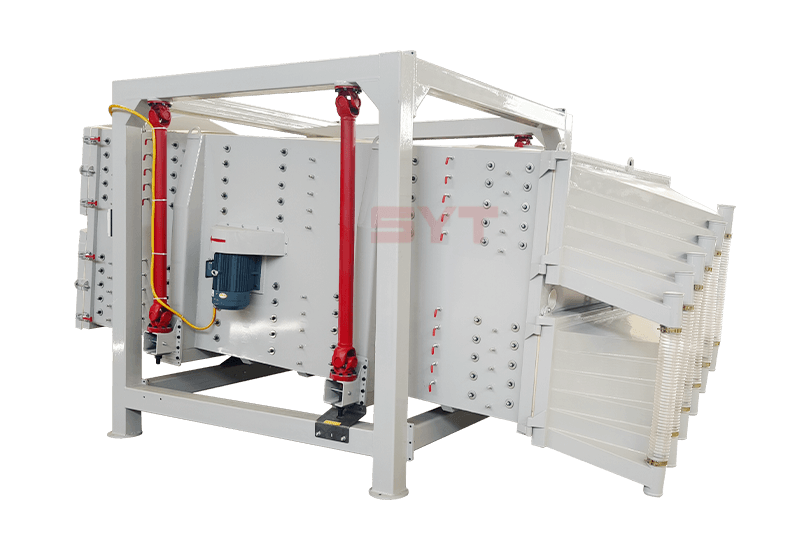
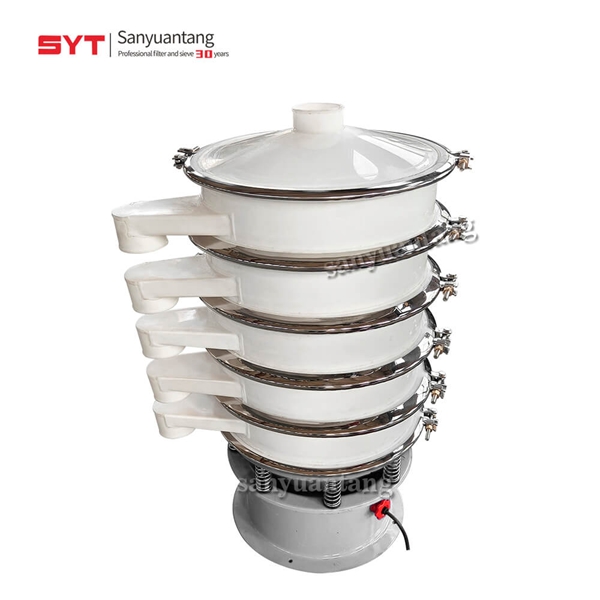
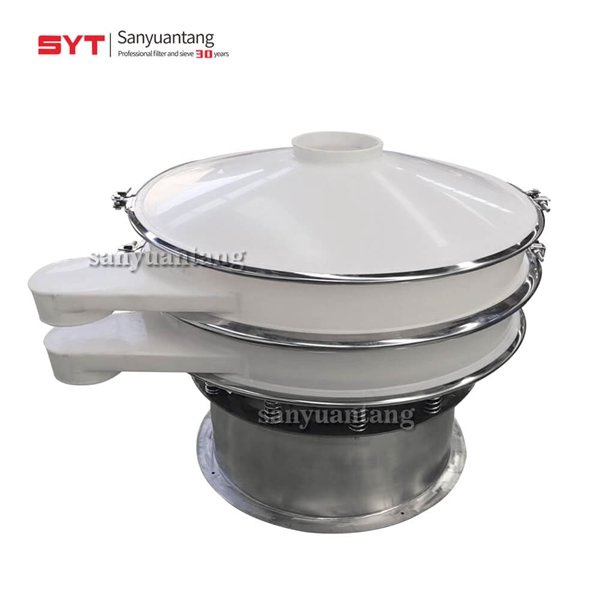
In addition to material selection, equipment design influences screening performance and maintenance efficiency. Sanyuantang plastic vibrating sieves are developed for chemical processing environments.
Design features include:
Fully enclosed structure to limit dust emission
Smooth internal flow paths to reduce material retention
Quick-release clamps for screen access and replacement
Structures designed for regular cleaning
Customized inlet and outlet configurations for production line integration
For chemical and pharmaceutical applications, compliance with process and safety requirements is essential.
Depending on application needs, Sanyuantang plastic vibrating sieves can be configured with:
FDA-compliant plastic materials
Designs suitable for GMP-oriented production environments
Spark-free construction
Optional explosion-proof motor configurations
Plastic vibrating sieves are commonly used for:
Corrosive materials such as salts, acids, and alkalis
High-purity materials including pharmaceutical ingredients and electronic chemicals
Materials prone to agglomeration such as resins, pigments, and powder coatings
Fine chemical powders with specific safety requirements
When selecting a plastic vibrating sieve, the following factors should be evaluated:
Chemical properties of the material
Purity requirements
Particle size distribution and throughput
Adhesion or agglomeration tendencies
Safety and environmental requirements
Cleaning and maintenance frequency
Sanyuantang offers application-based plastic vibrating sieve configurations tailored to meet the diverse requirements of various chemical processing applications.
In chemical screening operations where corrosion resistance, contamination control, and operational safety are required, plastic vibration sieves represent a practical and technically suitable solution.
Through appropriate material selection, process-oriented design, and application-specific configuration, Sanyuantang supports stable and reliable screening performance across a wide range of chemical processing applications.